Four years can make an incredible difference.
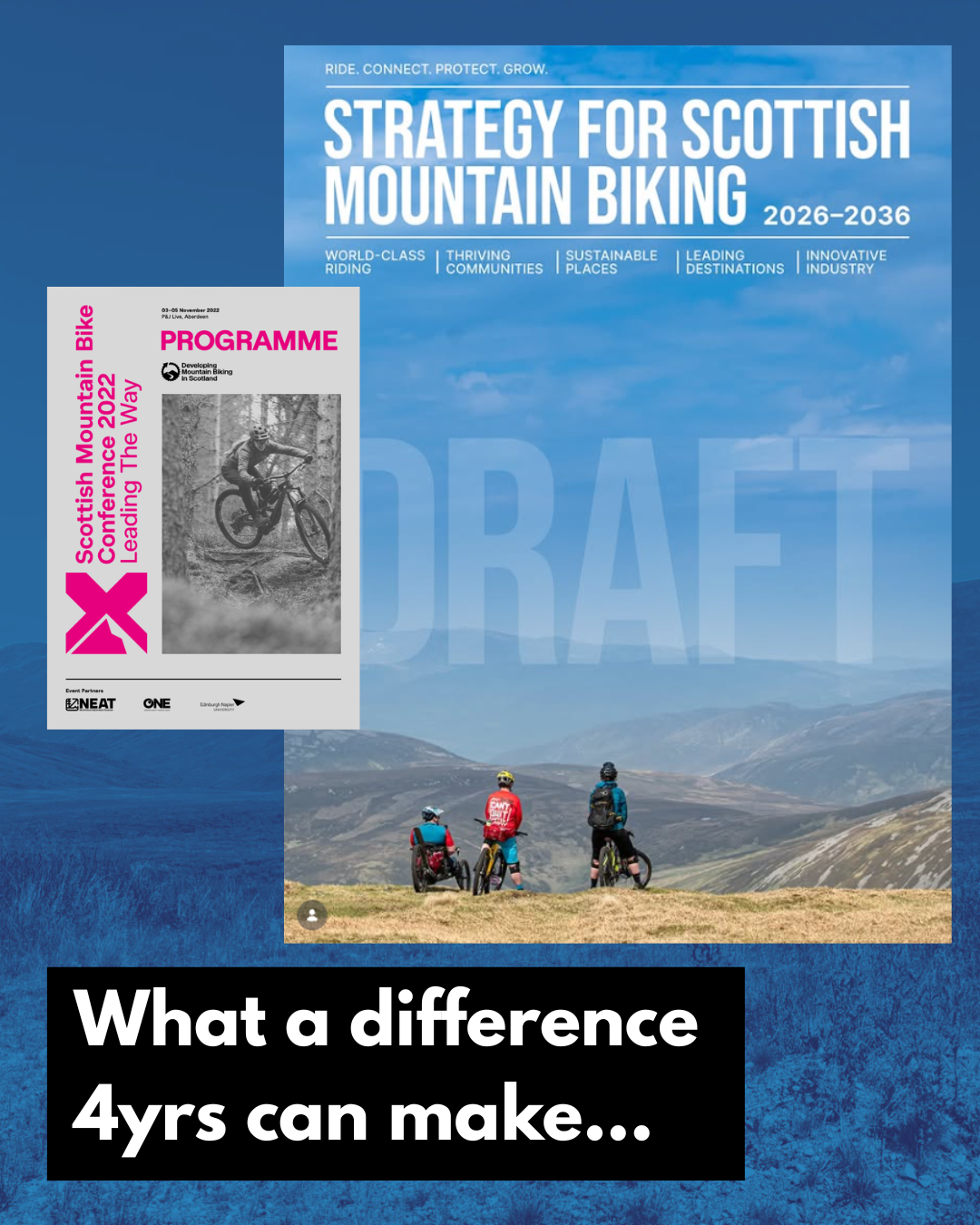
This week DMBinS shared the draft cover of the new Strategy for Scottish Mountain Biking 2026–2036.
At first glance it's just a beautiful photograph by Pete Scullion, taken on Glas Maol.
But to me, it represents something so much bigger.
In November 2022, just a few weeks after setting up Adaptive Riders Collective CIC, I travelled to my first Scottish Mountain Bike Conference in Aberdeen.
If I'm honest, I was terrified.
I was convinced everyone would know more than me. I wondered whether I even deserved to be there. Like many people starting something new, I was battling a fair bit of imposter syndrome.
More than anything though, I wanted to answer one question.
Was disability inclusion and adaptive mountain biking actually on the agenda for mountain biking in Scotland?
I came away feeling a little disappointed.
The conference itself was excellent. There were inspiring talks about trails, destinations, health, innovation and community, and I still remember Stu Thomson's keynote about the power of community. It genuinely had a profound influence on how I thought about what ARC could become, and it's quite special that, nearly four years later, Stu is now joining ARC as one of our trustees.
I also remember Stu including some fantastic photographs from the Dukes Weekender, featuring riders on off-road adaptive cycles alongside everyone else. Looking back, those images now feel quite symbolic. They hinted at what was possible, even if adaptive mountain biking hadn't yet become part of the wider strategic conversation.
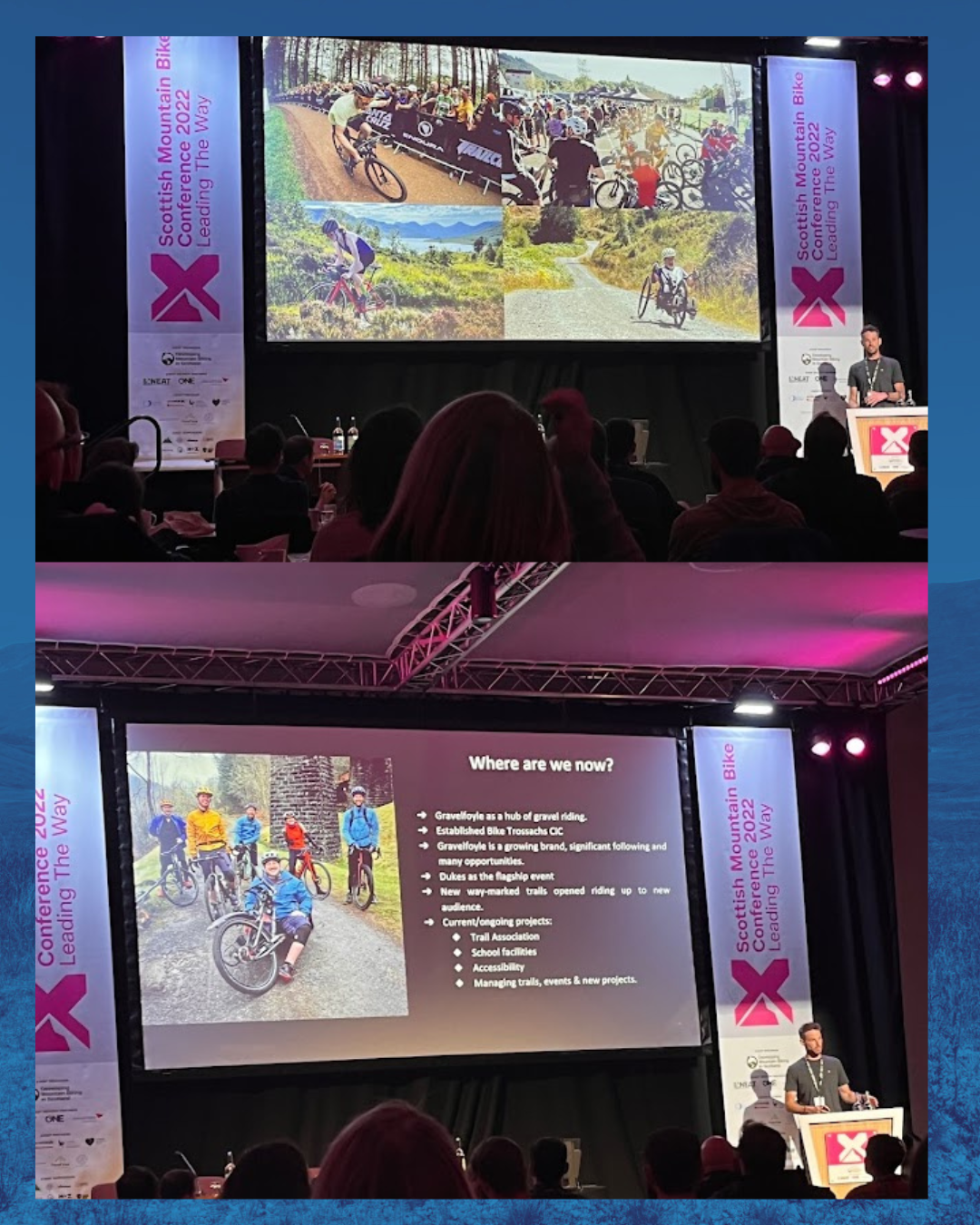
But despite all those conversations, I could find almost no mention of adaptive mountain biking. The only reference I remember was a single sentence tucked away in one of the delegate documents.
It wasn't anyone's fault.
It simply reflected where we were as a community at that point in time.
Fast forward to today.
When I saw this cover, I smiled. Not because I'm in the photograph but because of what the photograph represents.
Three riders.
One adaptive bike.
Two upright bikes.
Nobody is the odd one out.
Nobody is being presented as a novelty.
Nobody is "the disabled rider."
Just three mountain bikers sharing an incredible place.
To me, that's what inclusion looks like.
What I love most is that the image doesn't make a point of the adaptive bike. It doesn't feel staged. It doesn't feel like inclusion has been added for the sake of a photograph. It simply looks like what mountain biking in Scotland is increasingly becoming – people riding together.
Over the last four years I've watched something really encouraging happen across Scotland. Trail centres, event organisers, land managers, governing bodies, volunteers, clubs, coaches, photographers and thousands of riders haven't just become more aware of adaptive mountain biking, they've become genuinely curious.
Instead of asking,
"Can adaptive bikes come?"
The question has increasingly become,
"How do we make this work?"
That shift is enormous.
Because curiosity leads to conversations. Conversations lead to understanding. Understanding leads to confidence. Confidence leads to change.
Today, more events than ever are welcoming riders on adaptive bikes. Organisers are working with riders and with ARC to think about routes, logistics and experiences so that they aren't simply able to take part, but feel genuinely included and celebrated. Not because they're ticking a box, but because everyone wants the event to be the best it can be for all riders.
Looking back, one of the things that affirms our progress the most is that we're no longer just talking about inclusion—we're building it together.
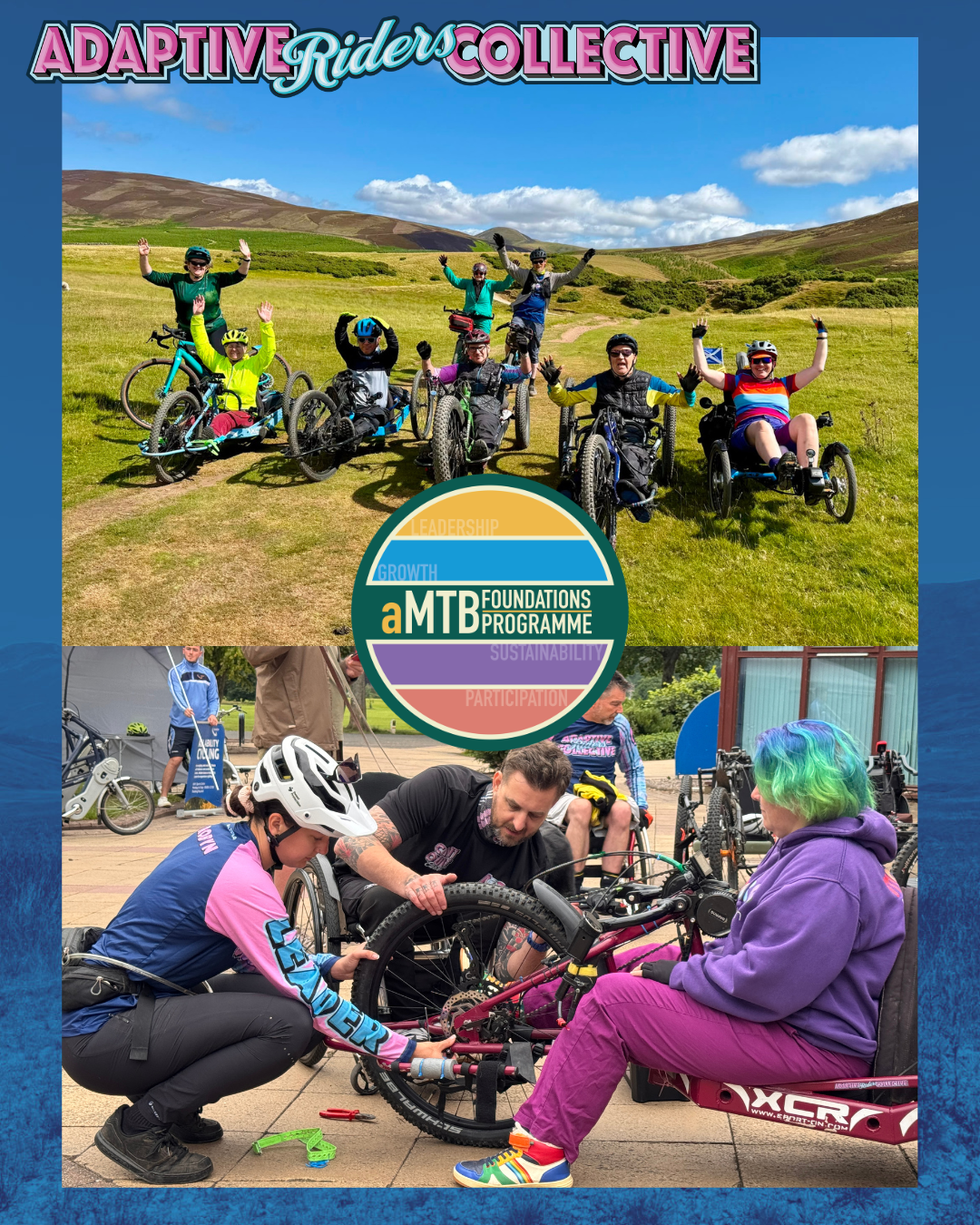
Through the aMTB Foundations Programme, we're now working alongside DMBinS and the Scottish Cycling Foundation to introduce more people to off-road adaptive cycling, train more qualified ride leaders who are adaptive riders themselves, and develop the partnerships that will make adaptive mountain biking a natural and fully integrated part of cycling in Scotland.
To me, that's what lasting change looks like. Not one organisation doing something different, but multiple organisations choosing to work together because they all believe the future of mountain biking should be one that everyone can be part of.
I also think it's important to truly recognise the role DMBinS have played in this journey. Organisations don't thrive unless the people within them are willing to listen, learn and evolve. Over the last few years they've embraced those conversations, welcomed challenge, and worked with us to help shape a more inclusive future for mountain biking in Scotland. That willingness to keep improving deserves to be celebrated and put in the spotlight.
That's a completely different mindset. And that's why I think this photograph matters.
It's not celebrating disability performatively. It’s not just a novelty. It's genuinely celebrating integration.
It's saying that the future of mountain biking in Scotland is one where riders on adaptive bikes and riders on two wheels share the same trails, the same adventures and the same community.
The biggest change over the last four years hasn't been the bikes, the trails or the events.
It's been the mindset.
Of course, there is still plenty to do.
There are still barriers to remove, trails to improve, events to make more accessible and more people to bring on the journey. But I genuinely believe we're heading in the right direction.
I'm incredibly proud of the part Adaptive Riders Collective has played, but even more proud of the willingness shown by the wider mountain biking community to listen, learn, adapt and embrace change.
This isn't ARC's success. It's a success shared by everyone who has chosen curiosity over assumptions, collaboration over hesitation, and inclusion over exclusion.
Four years ago, I walked into that conference wondering whether adaptive mountain biking had a place in Scotland's future. Looking at this strategy cover, I don't think that question needs answering anymore.
And if this draft strategy is a glimpse of the next ten years of mountain biking in Scotland...
I honestly couldn't be more excited.
(**I also have to say a huge thank you to Bike Trossachs CIC, who kindly paid for me to attend that conference. They had absolutely no obligation to do so, but they saw something in ARC before we had really found our feet. At a time when I was questioning whether I even belonged in the room, their support and encouragement gave me the confidence to keep showing up. It's one of those acts of kindness that has stayed with me ever since.)